Category: Media Archaeology

  • Upcoming book: The Museum of Imaginary Musical Instruments

    Upcoming book: The Museum of Imaginary Musical Instruments

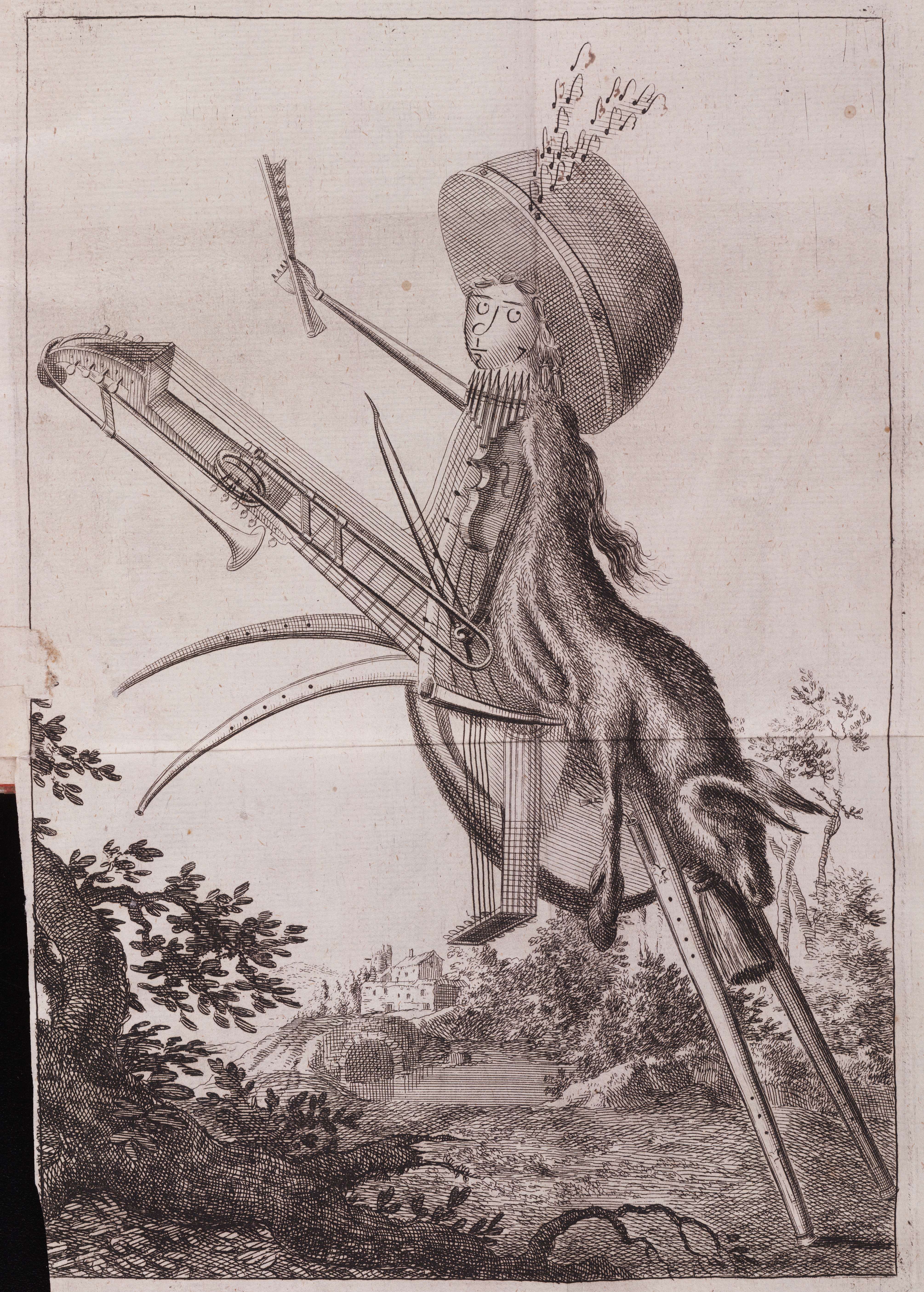
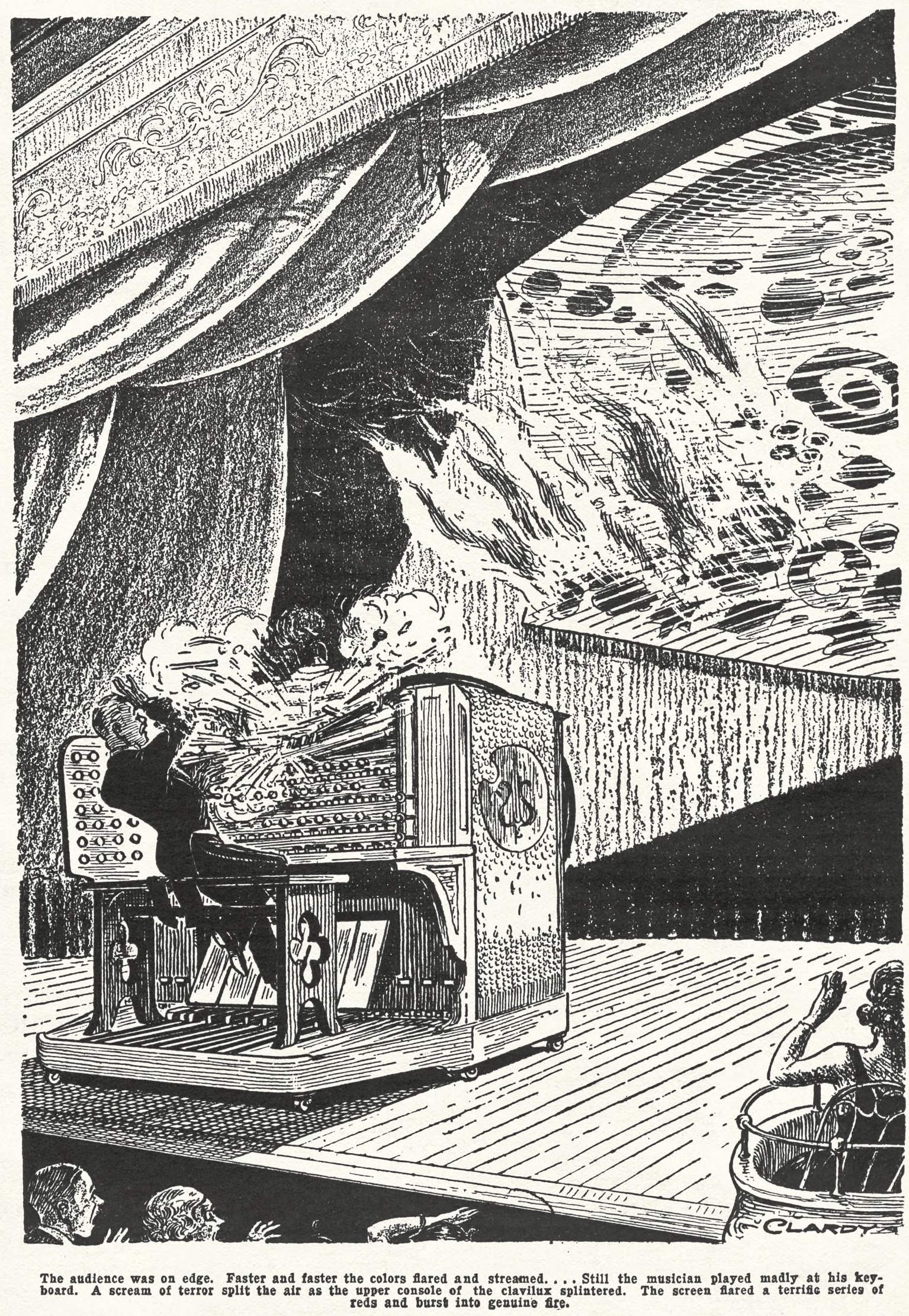
    As a reader of this blog, you may be familiar with the online Museum of Imaginary Musical Instruments – a site Thomas Patteson and I launched in 2013 to showcase imaginary musical instruments we came across in our research.

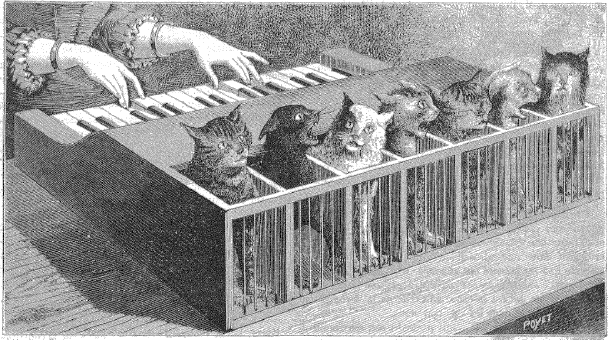
    Now, it’s becoming a book! And it turns out the world of imaginary musical instruments is even bigger, weirder and more wonderful than we knew. With over 80 images, the book includes some classics from the online museum (like the cat piano and steam concert) and many new gems. We organized these into a guided tour that offers both a cultural history and a study of creative thought, and reveals changing ideas about sound, invention, and the limits of the possible.

    The Museum of Imaginary Musical Instruments will be published by Reaktion in 2026, available in April in the UK and July in the US. We hope it sparks something of the joy and wonder we experienced in gathering these remarkable artifacts.

  • Audiovisual Returns

    An excerpt from my book, Haydn’s Sunrise, Beethoven’s Shadow: Audiovisual Culture and the Emergence of Musical Romanticism (University of Chicago Press, 2016), has been published at the blog Musicology Now. You can read it here: http://musicologynow.ams-net.org/2016/10/audiovisual-returns.html

    image-for-musicology-now
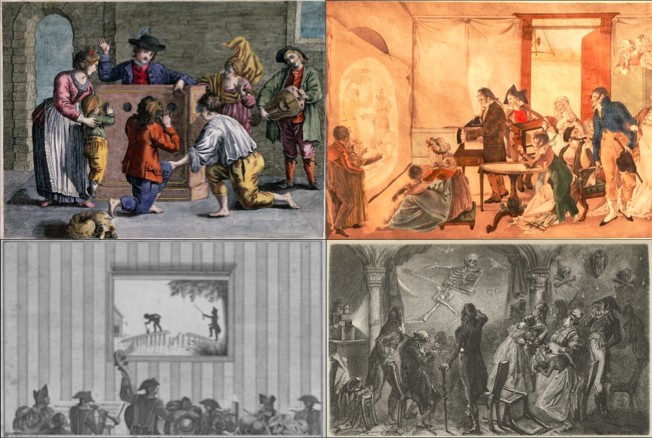
    eighteenth-century audiovisual culture (clockwise from top left): peepshow, magic lantern show, shadow-play, phantasmagoria

  • Haydn’s Sunrise, Beethoven’s Shadow: Book Out Now

    Haydn’s Sunrise, Beethoven’s Shadow: Book Out Now

    One critic, writing around 1800, had this to say about Haydn’s oratorio The Creation:

    “what can aesthetics have to say to a natural history, or geogony, set to music, where the objects pass before us as in a magic lantern?”

    The remark made me to wonder: what is a magic lantern? And why was it so bad for a musical work to be like one?

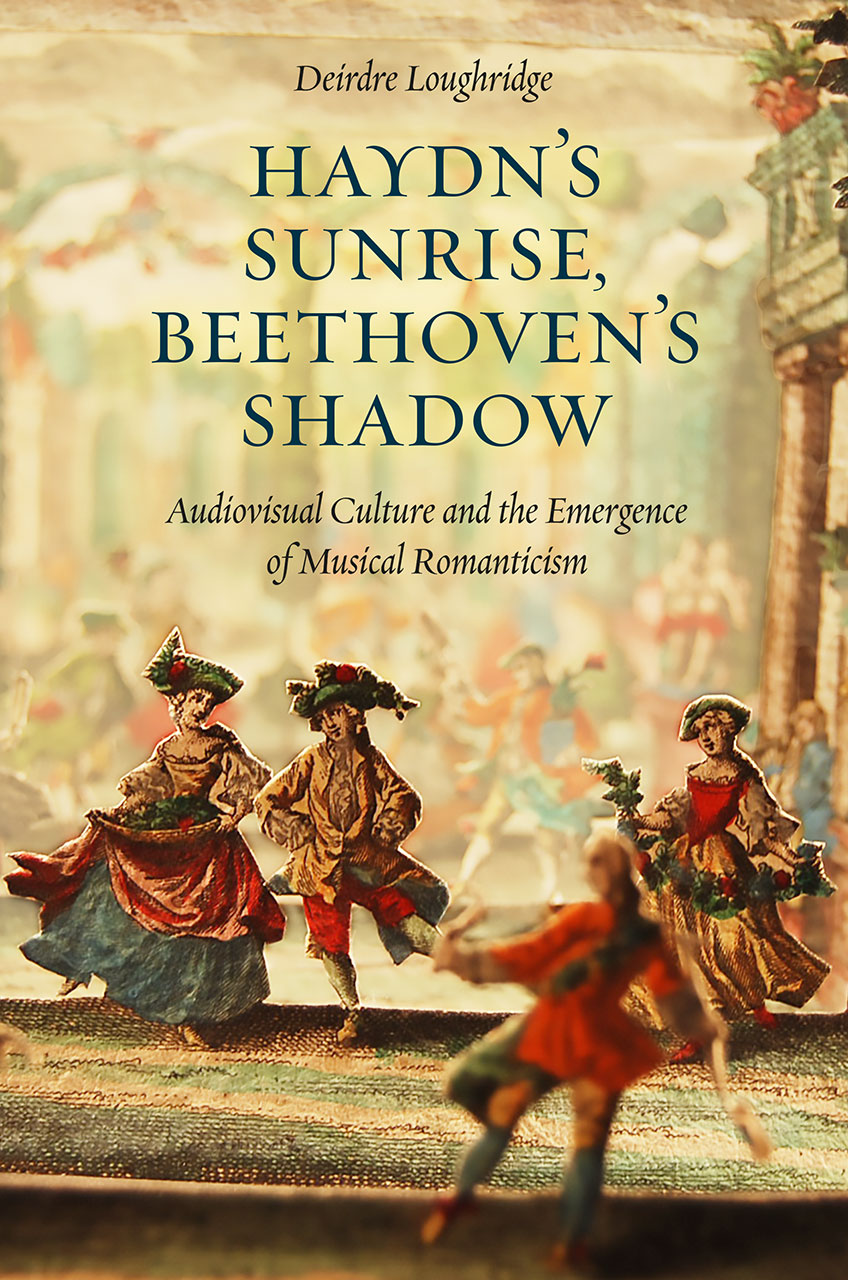
    So began the research journey that has led to the publication of my book, Haydn’s Sunrise, Beethoven’s Shadow: Audiovisual Culture and the Emergence of Musical Romanticism, out now from University of Chicago Press (also available from the usual suspects). In it, you can find out what a magic lantern is (an early form of slide projector), why it was so bad for a musical work to be like one – but also how the links people forged between music and moving-image technologies in the time of Haydn and Beethoven fostered new ways of performing, listening to and thinking about music. As it turns out, there was a vibrant culture of peep and screen media in the eighteenth century that both involved music and informed musical experiences even when the technologies themselves were not present on stage. Beyond magic lanterns, there were telescopes, microscopes, peepshows, shadow-plays and phantasmagorias, which found their way into operas, salons, scientific entertainments and – as in the case of the quote above – the very ways people perceived and described music.

    I hope you’ll check it out!

  • Imaginary Mechanical Instruments

    Imaginary Mechanical Instruments

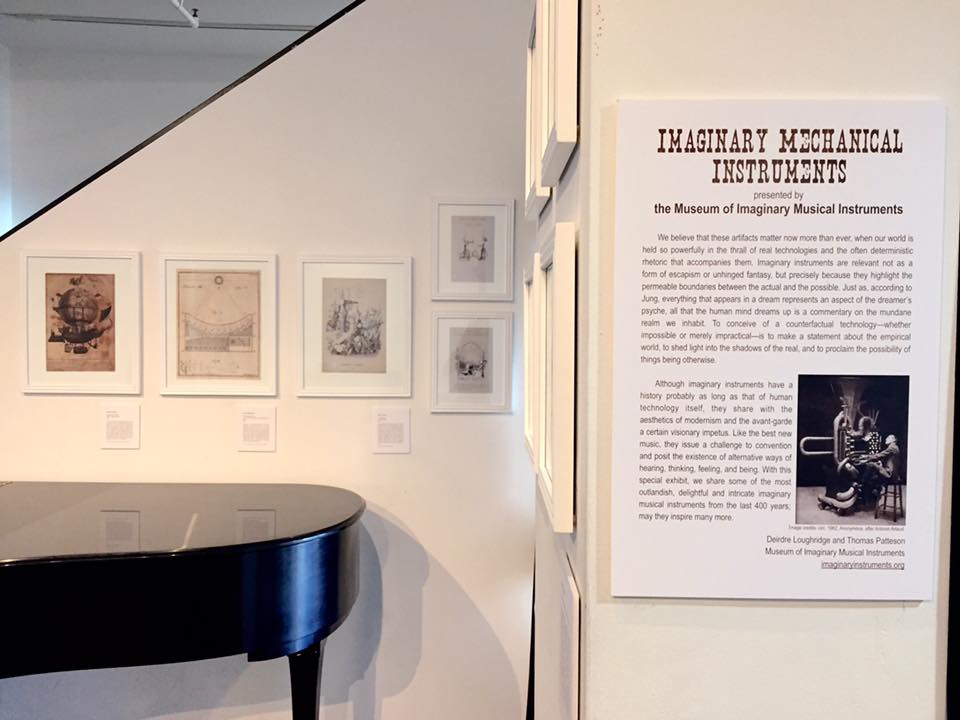
    A glimpse of a real live exhibit of imaginary mechanical instruments at the Center for New Music in San Francisco:
    imaginary-mechanical-instruments-cnm

    A note on the show from your curators, Deirdre Loughridge and Thomas Patteson:

    In a time of unprecedented activity and innovation in sound technology, a museum of imaginary musical instruments may seem unbearably twee. What could these phantasms have to do with the real instrumentarium that expands dizzyingly around us every day?

    We believe that these artifacts matter now more than ever, when our world is held so powerfully in the thrall of real technologies and the often deterministic rhetoric that accompanies them. Imaginary instruments are relevant not as a form of escapism or unhinged fantasy, but precisely because they highlight the permeable boundaries between the actual and the possible. Just as, according to Jung, everything that appears in a dream represents an aspect of the dreamer’s psyche, all that the human mind dreams up is a commentary on the mundane realm we inhabit. To conceive of a counterfactual technology—whether impossible or merely impractical—is to make a statement about the empirical world, to shed light into the shadows of the real, and to proclaim the possibility of things being otherwise.

    Although imaginary instruments have a history probably as long as that of human technology itself, they share with the aesthetics of modernism and the avant-garde a certain visionary impetus. Like the best new music, they issue a challenge to convention and posit the existence of alternative ways of hearing, thinking, feeling, and being. With this special exhibit, we share some of the most outlandish, delightful and intricate imaginary musical instruments from the last 400 years; may they inspire many more.

    July, 2016

    Head on over to the Center for New Music in San Francisco to see “Imaginary Mechanical Instruments.” Go Friday, Aug 26 at 7pm to enjoy a free reception. Visit the Museum of Imaginary Musical Instruments anytime to see more fantastic, counterfactual musical inventions.