Category: Liner Notes

  • Ghost Songs for Cell Phones (Liner Notes)

    Telecommunications have a history of being haunted. When Samuel B. Morse’s telegraph connected distant cities by transmitting electrical signals over wires – bringing people “together in spirit – in communication, and yet in body seven hundred miles apart!” (as a commentator remarked in 1857) – the technology was quickly taken up by those who sought to be “together in spirit” in another sense. Through a kind of “celestial telegraph,” it was believed, the dead could communicate with the living. With the introduction of radio, household objects became accidental antennae for the wireless transmissions; to the people who heard these objects suddenly start to speak, it seemed the voices must be coming from the beyond. The very term “media,” singular “medium,” reflects the ghosts in our communications technologies – “a medium” being a person who channels communications to and from the dead, “the media” being what channel telecommunications among the living.

    It is no longer so common to listen for the dead – to explain our new or unaccountable experiences in terms of visitants from the beyond. There is an opportunity to recover such listening here, however, with “Ghost Songs for Cell Phones.” For who is to say that noise in the signal – that sshhh, click or whisper – is not a ghost on the line?

  • Gebrauchsmusik for Today and Everyday (Liner Notes for “Practical Songs”)

    Gebrauchsmusik constitutes something with which one has dealings in the way one has dealings with things of everyday use…

    – Heinrich Besseler (1925)

    “Gebrauchsmusik” is a German compound adopted by English speakers to name something for which they had no single word.  It means “music for use,” “utility music,” or as the Oxford English Dictionary defines it, “music intended primarily for practical use and performance.”  We might wonder about this word: is not all music “for use?”  The term was coined in the 1920s, however, as an antonym to the default musical category of the time, namely, “concert music” – music to be presented by professionals and silently contemplated by everyone else.

    The concept of “Gebrauchsmusik” points back to before the nineteenth century, when composers wrote much of their music for amateurs or particular occasions, and music had not yet acquired the rarefied status it took on as growing middle class audiences supported ever more specially trained musicians.  For twentieth-century composers such as Paul Hindemith, writing Gebrauchsmusik meant writing music with a utilitarian function, for children or amateurs to play, and for new media (radio in his case) to disseminate.  Hindemith’s Music Day at Plön (1932), for example, provided a full day of music-making for a children’s camp, divided into “Morning Music,” “Table Music,” “Cantata” and “Evening Concert.”  The work has been compared to the medieval “office” – the cycle of psalms, prayers and lessons chanted by monks on a daily basis, according to the hours of a liturgical day.

    Today, we frequently hear that new technologies are democratizing access to music making.  We can now compose a symphony without reading music, and record a song without singing.  By enabling us to do such things, new technologies are encouraging us to emulate professionals – to make concert music.  We don’t need new technologies, however, to help us sing in the shower, in our cars, or in our heads as we decide what to do for lunch.  Perhaps we just need some modern-day Gebrauchsmusik: some practical songs for everyday use.

  • The Original Microphone (Liner Notes for “Sad Songs for Cell Phones”)

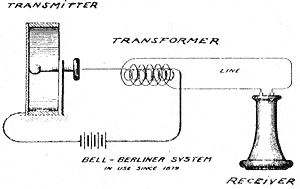
    realization of Bourseul's idea

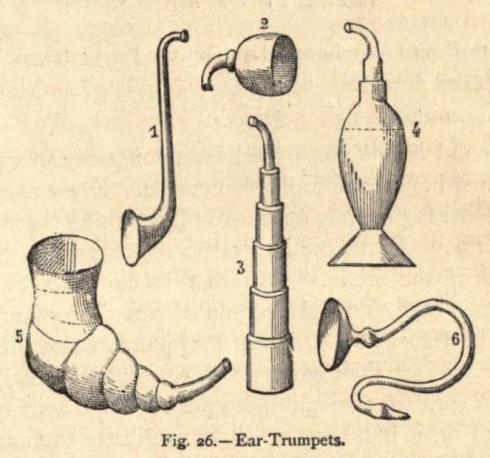
    The microphone as we know it – a device for turning acoustic vibrations into electrical signals – was first conceived in the 1850s, when Charles Bourseul described its application to making the voice audible at distance.  What Bourseul described was a telephone, and the component we call the microphone was intended to pick up the sounds of speech so they could be reproduced at the same time in another place.  The component acquired the name microphone, however, thanks to David Edward Hughes, who in 1878 showed that it could be used to make quiet sounds louder – an application he demonstrated upon the footsteps of a fly.  This way of conceiving the microphone – as a device for listening in on the tiny or hidden – predated electroacoustics.  In 1827, Charles Wheatstone, unaware of the stethoscope invented some fifteen years earlier, reinvented the device but gave it the more appropriate name “microphone.”  Over a hundred years before that, in 1684, the clergyman Narcissus Marsh observed that the ear trumpet should rightly be called a “microphone” on analogy with the “microscope”: it was an acoustical magnifier – a device one put to one’s ear in order to perceive sounds that would otherwise remain inaudible.  The microphone, in this sense, was not a device for transmitting one’s voice, but for extending one’s hearing.

    Listening to Sad Songs for Cell Phones, we can experience the microphone in its original sense.  Though recorded by the microphone built into a cell phone, the songs were not sung to be heard at a distance.  The microphone is instead the device that allows us to hear – the ear trumpet we’ve turned upon a hitherto inaudible phenomenon.  We are not there in the room where these songs were sung, but the microphone – the technological extension of our hearing – is.  This is what we can experience in the lo-fidelity of these recordings, and in the monoaural listening they invite.

    Further Listening: The Wiggly Tendrils, Sad Songs for Cell Phones (stream or download)