Coming in December 2026: Bone Flute to Auto-Tune: Forty Thousand Years of Music Technology (University of Chicago Press).
Over forty thousand years ago, humans fashioned flutes from bone. The first book to offer a history of Western music through the lens of tools, Bone Flute to Auto-Tune explores the relationship between music and technology from the Paleolithic Age to the present day. By examining music-technological transitions from across history, including the violin, piano, saxophone, electric guitar and synthesizer, Bone Flute to Auto-Tune thinks through how and why certain changes have taken place and shows how earlier eras have been built into later technologies. The result is a music history attuned to the possibilities that new technologies open up or reveal and those they foreclose or conceal, and that considers what was gained and what lost in the transition from one technology to another. By identifying turning points and trade-offs, a long historical perspective helps us see alternate paths along which music technologies might have developed, and navigate our own moment in the ongoing interplay between technological change and the enduring human need for music. Find out more here
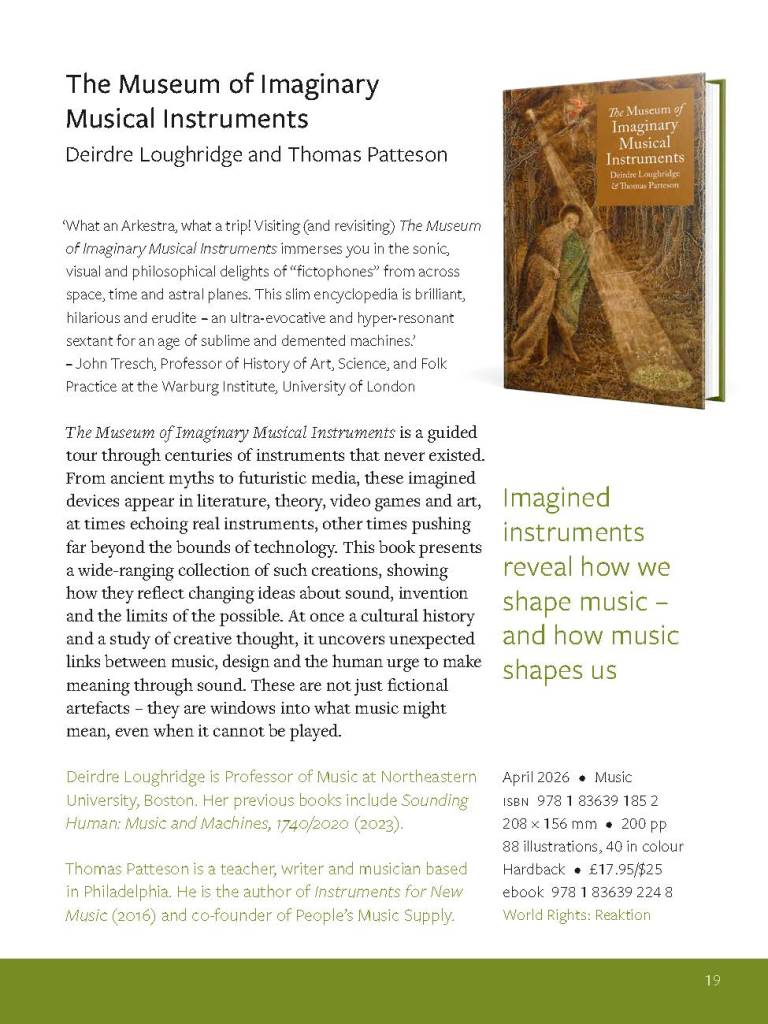
Out now: The Museum of Imaginary Musical Instruments (Reaktion)
Building on our virtual museum, the book explores the history of imagination through an expansive collection of speculative musical instruments.
Order here or wherever you purchase books
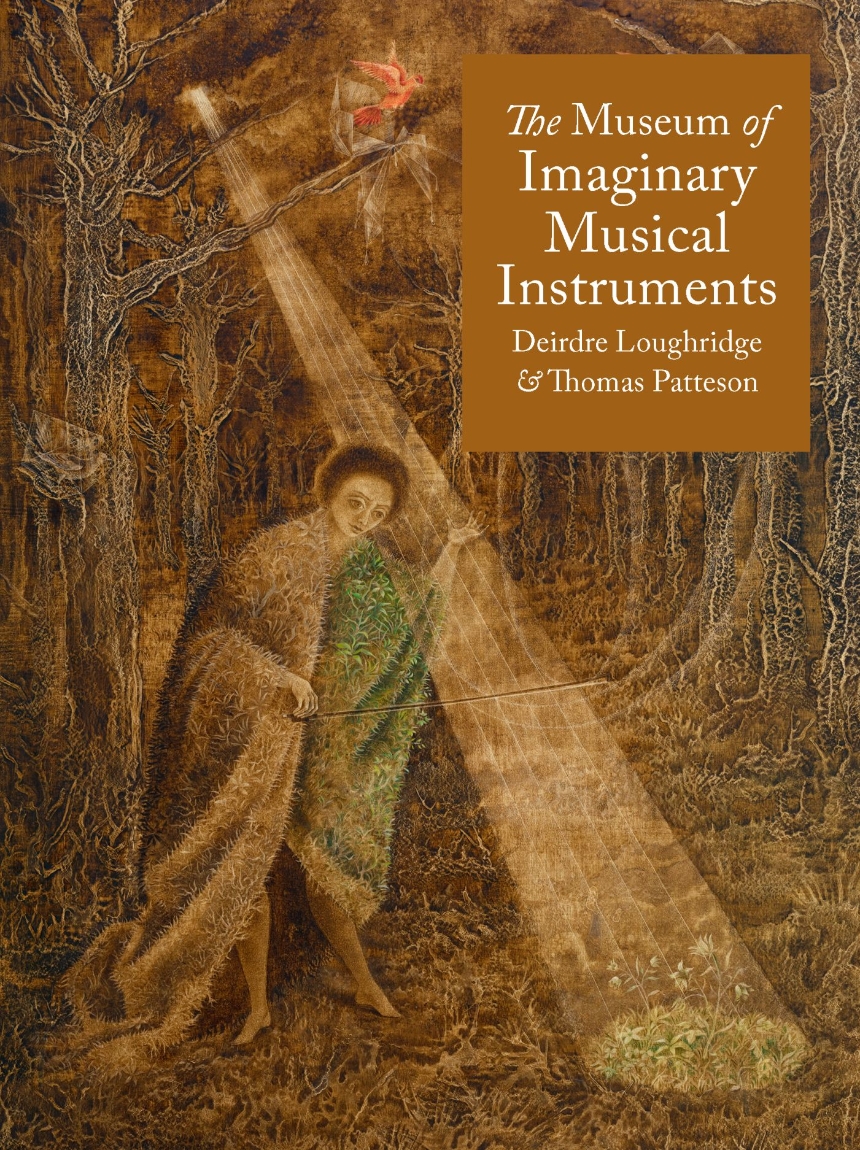
The Museum of Imaginary Musical Instruments
(Reaktion, out July 2026 in the US)
The Museum of Imaginary Musical Instruments is a guided tour through centuries of instruments that never existed. From ancient myths to futuristic media, these imagined devices appear in literature, theory, video games, and art, at times echoing real instruments, other times pushing far beyond the bounds of technology. This book presents a wide-ranging collection of such creations, showing how they reflect changing ideas about sound, invention, and the limits of the possible. At once a cultural history and a study of creative thought, it uncovers unexpected links between music, design, and the human urge to make meaning through sound. These are not just fictional artifacts; they are windows into what music might mean, even when it cannot be played.
Kirkus calls it “a beguiling catalog” that will “help readers imagine the impossible”; Leonardo praises it as “colorful, accessible and entertaining,” with the authors’ “joy and wonder” “brilliantly communicated throughout,” and The Wall Street Journal calls it “curious and lively.”
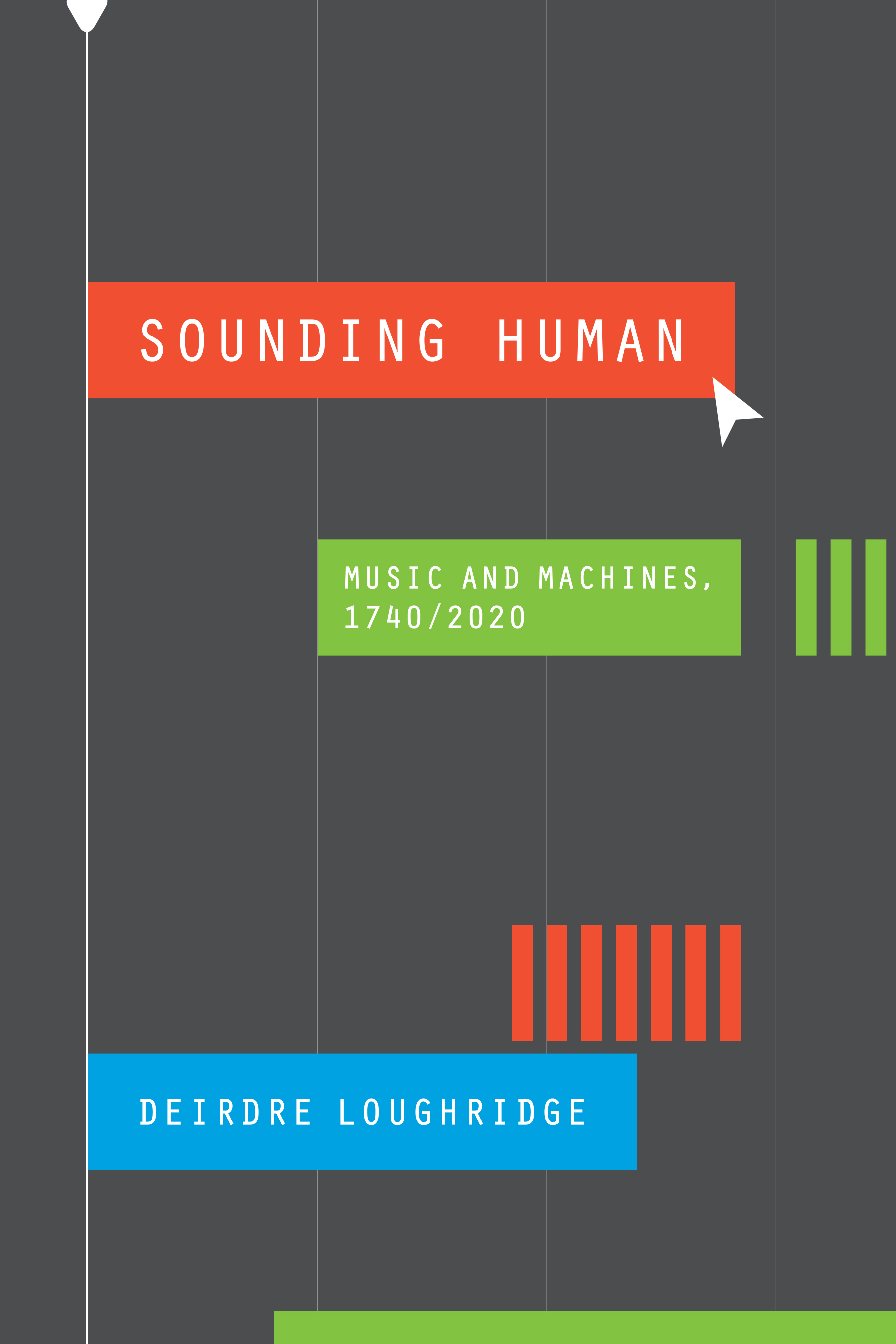
Sounding Human: Music & Machines 1740/2020
(University of Chicago Press, 2023)
Sounding Human enters the debate on human-machine relationships in music, exploring how categories of human and machine have been continually renegotiated over the centuries. From music-generating computer programs to older musical instruments and music notation, Sounding Human shows how machines have always actively shaped the act of music composition. In doing so, Loughridge reveals how musical artifacts have been—or can be—used to help explain and contest what it is to be human.
On music and tech book list at Wallpaper Magazine
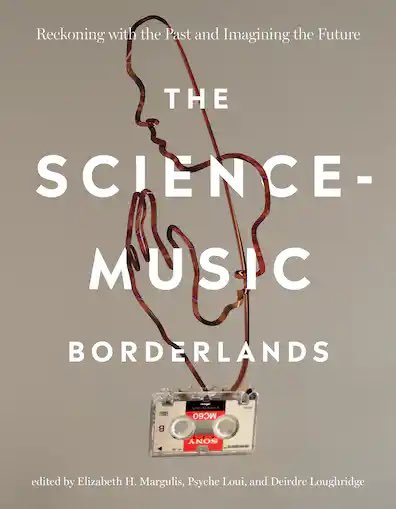
“A conceptually ambitious yet clearheaded meditation on transdisciplinary methodlogy, the 2024 Solie Award winners redraw the coordinates of The Science-Music Borderlands. To transcend siloed humanistic and scientific approaches to musical inquiry, the editors nimbly guide an international array of musicologists, cognitive scientists, neuroscientists, and musicians to a strikingly unified voice. By asking humanistically informed scientific questions and challenging longstanding presumptions about the validity of scientific methodology in music studies, the book invites readers and researchers alike to meet at the traditional disciplinary boundaries, to explore the epistemological gaps, and to bridge the humanities-science divide.” -Solie award citation from the American Musicological Society
2024 Ruth A. Solie award from the American Musicological Society
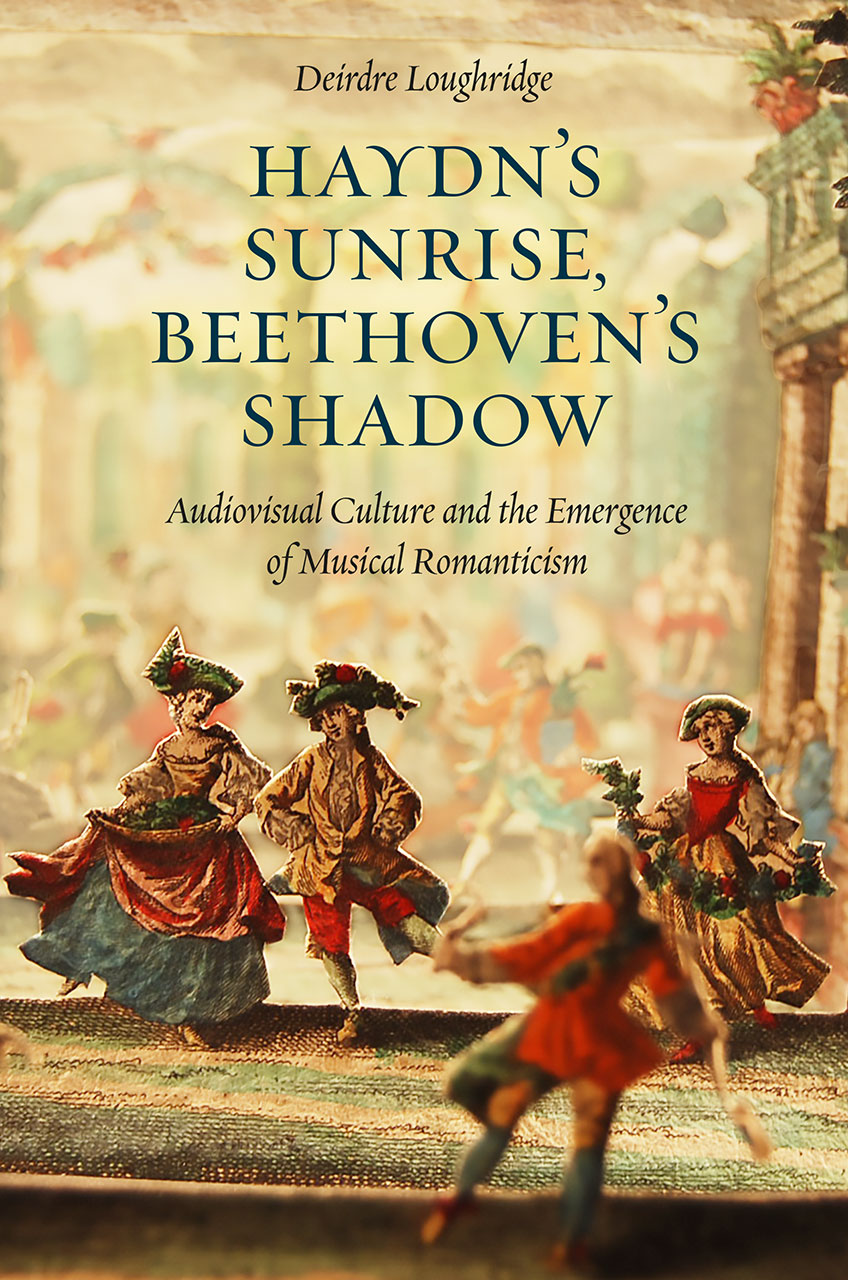
Haydn’s Sunrise, Beethoven’s Shadow: Audiovisual Culture and the Emergence of Musical Romanticism
(University of Chicago Press, 2016)
The years between roughly 1760 and 1810, a period stretching from the rise of Joseph Haydn’s career to the height of Ludwig van Beethoven’s, are often viewed as a golden age for musical culture, when audiences started to revel in the sounds of the concert hall. But the latter half of the eighteenth century also saw proliferating optical technologies—including magnifying instruments, magic lanterns, peepshows, and shadow-plays—that offered new performance tools, fostered musical innovation, and shaped the very idea of “pure” music. Haydn’s Sunrise, Beethoven’s Shadow explores the early romantic blending of sight and sound as encountered in popular science, street entertainments, opera, and music criticism. An illuminating look at romantic musical practices and aesthetics, this book yields surprising relations between the past and present and offers insight into our own contemporary audiovisual culture.
2017 Kenshur Prize for outstanding book in 18th-century studies
Read an excerpt adapted from the concluding chapter at Musicology Now, the blog of the American Musicological Society

